
Background:
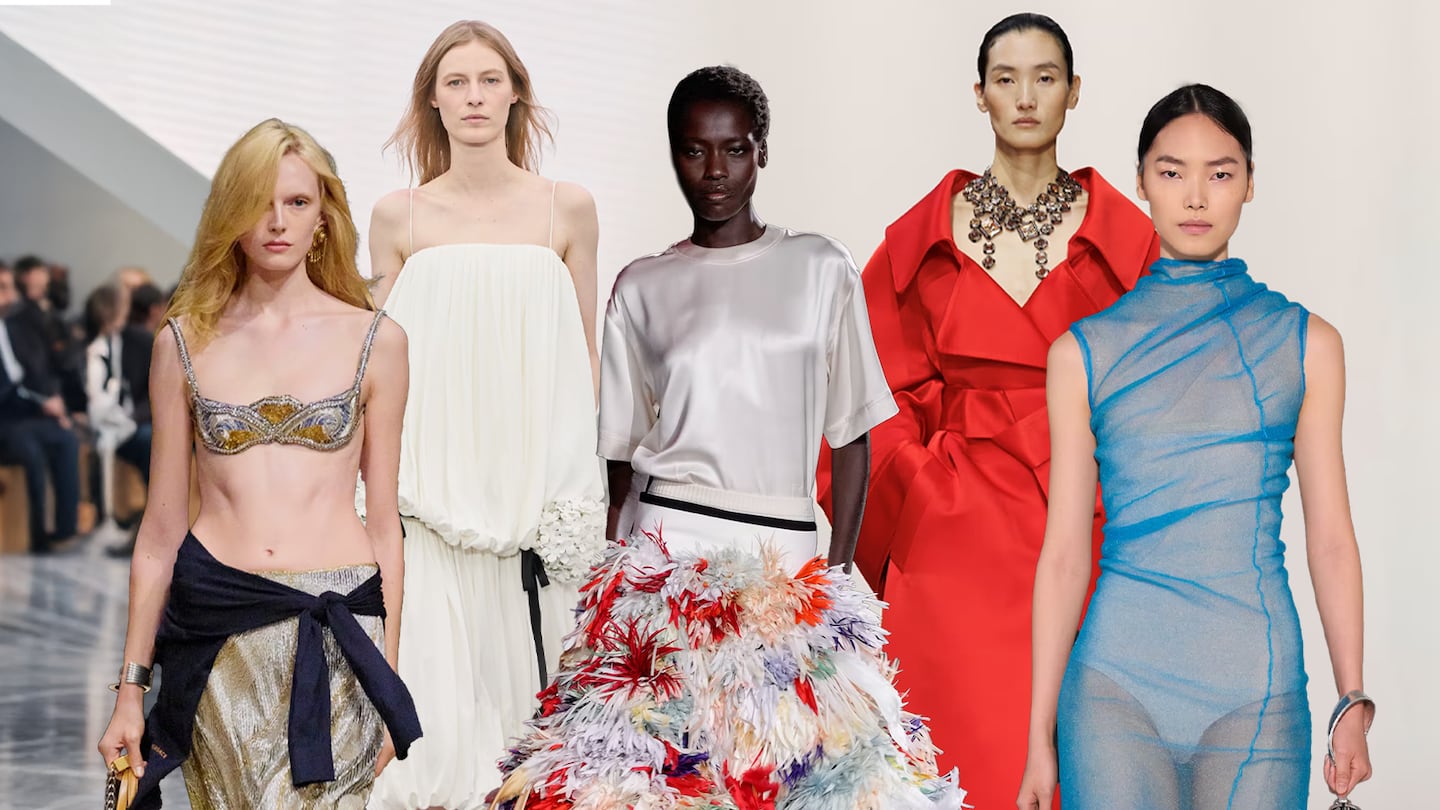
We’ve simply returned from what was undoubtedly the largest vogue month ever, a high-stakes season that noticed new inventive administrators debut their visions for contemporary inventive management beneath the highlight at Chanel, Dior, Jil Sander, Loewe, Jean Paul Gaultier — and plenty of extra.
So what to make of all of it? A lot of it was about expectations. For some designers like Jonathan Anderson at Dior and Pierpoalo Piccioli at Balenciaga, expectations had been working excessive making it virtually unattainable to please the business and on-line critics. Others like Dario Vitale at Versace and Jack McCullough and Lazaro Hernandez at Loewe had been written off by some observers even earlier than they confirmed — leaving them the chance to shock, delight and overdeliver. Just one present appears to have unanimously impressed throughout: Matthieu Blazy’s huge debut at Chanel, the final huge present at Paris Trend Week.
“It was the one present that incontrovertibly did what it needed to do. Not only for the model, however for the enterprise, for the business,” says Blanks. “And I believe folks might depart Paris on the second to final day on an upbeat notice. Earlier within the week, a few of the most anticipated reveals, like Jonathan at Dior or Pierpaolo at Balenciaga had been extremely polarizing, and I believe there appears to be comparatively common settlement on Chanel.”
This week on the BoF podcast, Imran Amed sits down with Tim Blanks to unpack the highlights of Trend Month, the designer versus home debate, and why time and empathy matter this season.
Key Insights:
- In keeping with Blanks, Blazy “managed to do a Chanel that mirrored [Coco Chanel], but in addition mirrored his emotions about what she had executed together with his vocabulary, which could be very craft-oriented, very experimental.” Crucially, Blazy struck a steadiness “between what Chanel was and what Chanel must be,” he provides.
- At Dior, Anderson opened with an audacious collaboration with filmmaker journalist Adam Curtis on a brief movie that blended vogue with slasher horror. “It was form of an act of contextualisation for what he intends for the home,” says Blanks. Amed additionally welcomes Anderson’s measured exploration of the luxurious home. “The Loewe that he constructed was constructed over time. It took 10 years. And so I believe we must always count on the identical with him at Dior,” he says. “Whereas perhaps not every part in my opinion labored in that Dior present, I believe that’s the level since you study from that.”
- Bellotti’s Jil Sander debut reads as a studied return to essence. “There have been so many garments in that assortment that had been very, very fascinating,” mentioned Blanks, noting it felt “much less about minimalism and extra about this form of very intense purity.” The gathering carried “a really peculiar sort of eroticism as a result of every part felt to me very a lot about contact.”
- For Duran Lantink, compatibility at Jean Paul Gaultier was by no means the problem. “His angle to every part is so just like Gaultier’s angle. The form of provocation, the intercourse video games,” says Blanks. But he was left wanting extra. “I wished a lot extra from that present. And ultimately, I didn’t really feel that there was sufficient Gaultier or sufficient Duran.”
- Amid a debut-heavy season dominated by males, Sarah Burton’s second outing at Givenchy reads as a quiet counterpoint and a reminder of feminine authorship on the highest degree. “She’s actually received the imp of the perverse in her,” says Blanks, earlier than praising a present that was “extraordinarily elegant … I believed I might see ladies wanting these garments. The way in which she elongated issues — it was so flattering and simply so easy.” Calling Burton “such a quiet power,” he provides, “I actually would like to see that assortment take off.”